 Little Pip
Choosing a Stroller
A travel system or a lightweight umbrella stroller? Lying flat for newborns, brakes, harnesses, and a choice that suits your sidewalks, stairs and elevators.
Your stroller will probably be the product you use every day and carry around the most. So the right choice is about your lifestyle, not just safety: Do you live on the third floor of a building with no elevator, or do you get around by car? Are the sidewalks in your neighborhood narrow and uneven, and will you use public transportation often? In the newborn period, a safe lying position, solid brakes and a good harness are must-haves; many other features are a matter of preference. This guide will help you work out what to ask in the store, which tests you can do yourself and which extras will actually be useful.
Travel system or a single stroller?
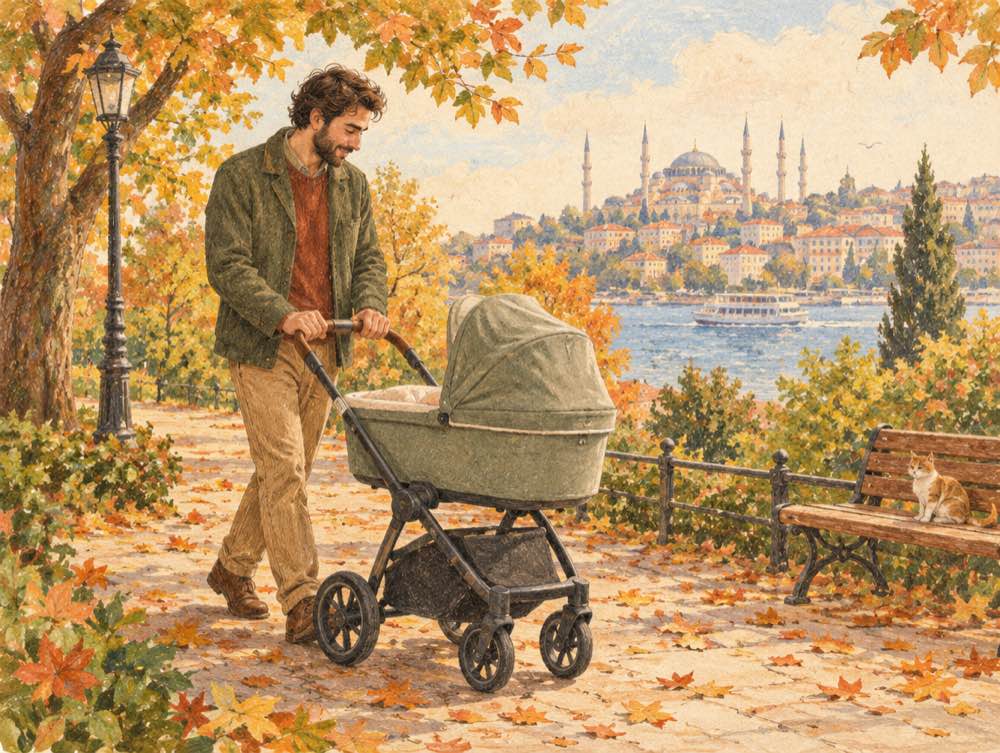
Travel systems usually consist of a frame, a carrycot or bassinet unit for the newborn, a seat unit used once your baby is bigger, and an infant car seat that clicks onto the frame. They're practical if you travel by car often, but they can be heavy and bulky. Strollers with a seat unit that can lie completely flat from birth do the job with fewer parts. Lightweight umbrella strollers take up little space when folded and make public transportation easier; however, most don't lie flat enough for a newborn and are usually used once the baby is older. Some families start with a baby carrier and a bassinet unit in the first months and switch to a lightweight stroller later. Think about your daily routine first, then choose your model.
Lying flat for newborns
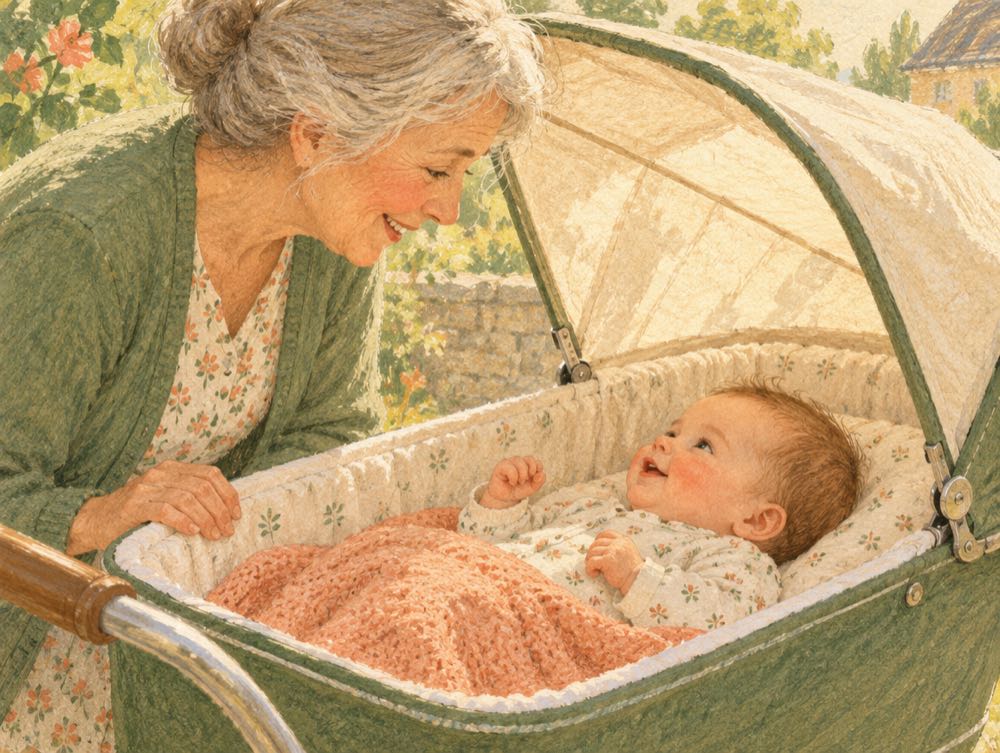
It's important for newborns and young babies to be able to lie flat in the stroller, because their neck muscles can't yet hold up their head, and staying semi-upright for a long time can strain the airway. That's why in the first months you need a carrycot, a bassinet unit or a seat unit that reclines fully flat. An infant car seat clicked onto the frame is handy for short transfers, but it's not recommended for your baby to stay in this seat for hours on long walks. If your baby falls asleep in the stroller, lay them on their back in their crib when you get home. A backrest with several recline positions lets your baby see the world as they grow. Being able to seat your baby facing you is also a nice option in the first months for eye contact and communication.
Safety: brakes, harness and standards
In Europe, there is the EN 1888 standard for strollers and pushchairs; seeing compliance with this standard on the label or in the manual is a good sign. The parking brake should work easily with your foot and keep the stroller still even on a slope. The seat unit should have a five-point harness: two at the shoulders, two at the waist, and one between the legs. Your baby should be buckled in every time from day one, because a baby who is starting to wriggle can slip out at an unexpected moment. The stroller must not fold by accident when the folding locks are open, and finger-pinch points should be shielded. If there's a wrist strap, always use it on slopes and on public transportation.
Your daily routes: sidewalks, stairs, elevators
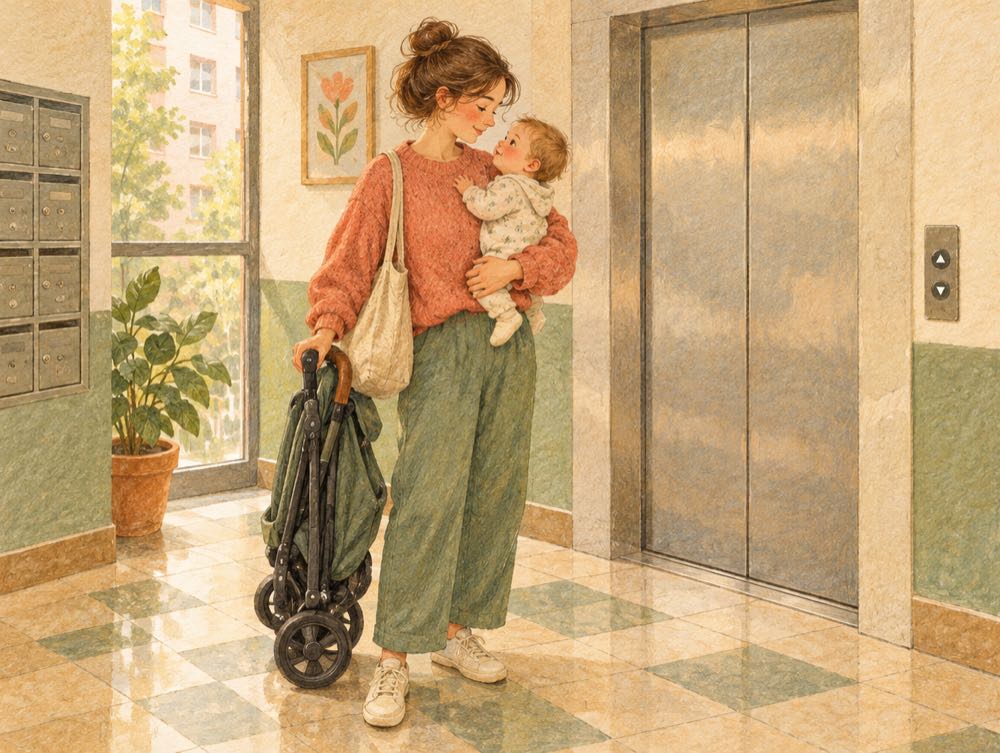
In many towns and cities, narrow sidewalks, high curbs, uneven paving, steep streets, and apartment buildings with no elevator or a narrow one are common. On rough ground, large, air-filled or suspension wheels give a smoother ride; small plastic wheels get stuck easily. If you have an elevator, measure its inside dimensions and door width, and check whether the stroller fits when unfolded. If you'll be climbing stairs, try in the store whether you can carry the folded weight on your own. Take your car's trunk measurements with you to check that it fits. Don't try to carry the stroller up or down stairs on your own with your baby inside; take your baby in your arms and carry the stroller separately, or ask for help.
Canopy, hot weather and handlebar
Where summers are hot, a wide canopy that extends forward and ventilation windows make life much easier. However, covering the stroller completely with a blanket, muslin or thick cloth can make the inside heat up quickly and become stuffy; instead, use a canopy that provides shade and airflow, and don't keep your baby outside during the hottest hours of the day. In winter, a wind cover and rain cover come in handy; check on your baby often while the rain cover is on. Don't hang heavy shopping bags or bags on the handlebar; the stroller can suddenly tip backward, especially when your baby is taken out. Put heavy items in the basket underneath, without going over its weight limit.
In-store checklist
Always try the stroller in the store: Can you fold and unfold it with one hand, and can you lift it when folded? Is the handlebar height right for you and your partner? Is the parking brake easy to use, and does the stroller stay put on a slope? Does it lie flat for a newborn, and does it have a five-point harness? Are the wheels suited to your streets, and can the front wheels be locked? Can the covers be removed and washed, and is the canopy wide enough? Does it fit in your elevator, through your doors and in your trunk? Does it state compliance with EN 1888 or a European safety standard? Extras you don't need: lots of decorative accessories, extra cup holders and organizer sets, special heated covers for the stroller, and buying more than one stroller at once. Choose one model first; you'll see your real needs once you're using it.
Sources (4)
- Baby safety, The Lullaby Trust
- Baby and child safety, NHS (England)
- Safety all around, American Academy of Pediatrics (AAP) · HealthyChildren.org
Sources last reviewed: October 2026. This article was written for Little Pip and is based on information published by these organizations.