 Little Pip
Choosing a Car Seat: i-Size, ISOFIX and Rear-Facing
The most important safety product you'll buy for your baby. Standards, rear-facing, ISOFIX, harness adjustment, the risks of secondhand seats, and the first ride home from the hospital.
Of all your baby purchases, the car seat is the one most worth the money and time. A well-chosen, correctly installed child car seat can protect your baby's life in a crash; carrying them on your lap is not safe even for a short distance, because at the moment of impact no adult's arms can hold on to a baby. The law in many places, including the U.S. and the U.K., also requires children to ride in a child seat suited to their age and size. In this guide you'll find how to read the standards on the label, why rear-facing matters so much, the difference between ISOFIX and seat belt installation, harness adjustment, and when to move up to the next seat. The best seat isn't the most expensive one; it's the one that fits your baby and your car and that you install correctly every time.
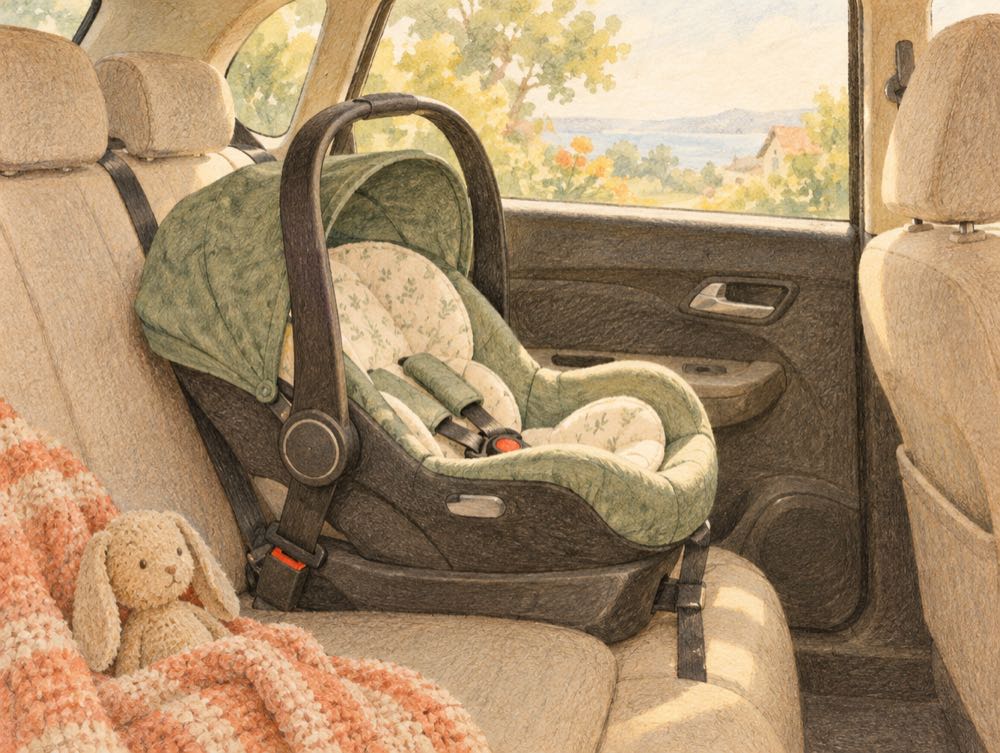
Reading the label: R129 (i-Size) and R44/04
In Europe and the U.K., child car seats are approved under the regulations of the United Nations Economic Commission for Europe. The seat carries an orange approval label. The current regulation is UN R129, also known as i-Size. R129 seats are classified by height, go through side-impact tests, and require babies to travel rear-facing until they are at least 15 months old. The older regulation, ECE R44/04, uses weight groups; for example, Group 0+ seats are for babies up to about 13 kg. Sales of R44-approved seats in Europe have been phased out; you may still have one or see them on the market. In the U.S., car seats must meet the federal safety standard (FMVSS 213) and carry a label saying so. If you're buying new, choose a seat approved to the current standard where you live. Never use a seat with no label or a label you can't read.
Types of seats: height or weight?
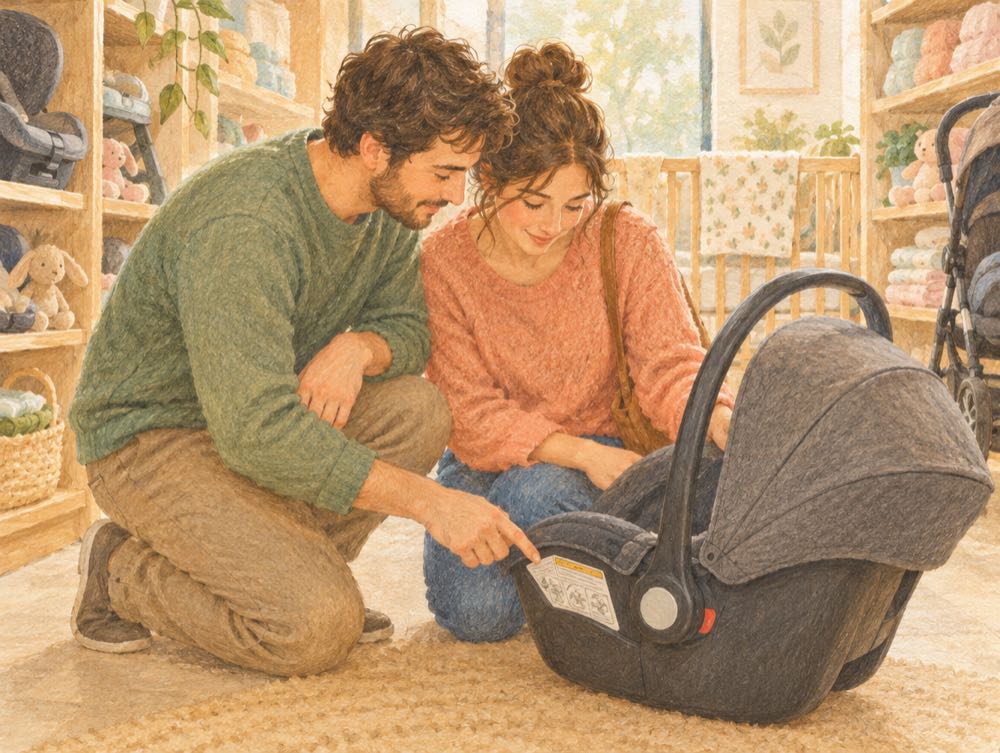
For a newborn, the most common option is an infant car seat with a carry handle, sometimes simply called a “carrier.” It faces the rear, can be taken out of the car and can often be clicked onto a stroller frame. As your baby grows, they reach this seat's height or weight limit and move on to a bigger seat that stays in the car. There are also “growing” seats that can be used for a long time from birth, change direction or have a rotating base; these can't easily be taken out of the car, but they are practical for some families. On R129 seats, the label gives a height range in centimeters and often an upper weight limit. When choosing, look less at your baby's current size and more at how long you'll be able to use the seat rear-facing.
Rear-facing: why for as long as possible?
Babies' heads are large and heavy compared with their bodies, while their neck muscles and spine are still developing. In a frontal crash, a rear-facing seat supports the baby's back, neck and head as one unit and spreads the force of the impact across the seat shell. In a forward-facing seat, the head is thrown sharply forward. That's why experts recommend that babies ride rear-facing up to the highest height and weight limit the seat allows. R129 sets a minimum age of 15 months for this; many seats allow rear-facing for much longer. Your baby's legs touching the vehicle seat back, or sitting with knees bent, is not a reason to stop rear-facing; children can sit comfortably in this position.
ISOFIX, seat belt and support leg
ISOFIX is a system that locks the seat directly onto metal anchor points in the car's body. It increases the chance of a correct installation, and on many models green indicators confirm that it is locked. ISOFIX seats have either a support leg or a top tether strap to prevent tipping. The support leg must rest fully on the car floor; some cars have a storage compartment in the floor, in which case check the manufacturer's vehicle compatibility list. Seats installed with the seat belt are also safe when installed correctly, and they give you flexibility in taxis or different cars; here it is essential to route the belt correctly through the colored guides on the seat. Whichever system you choose, ask to try the seat in your own car before buying and check the vehicle compatibility list.
Correct placement: airbag and back seat
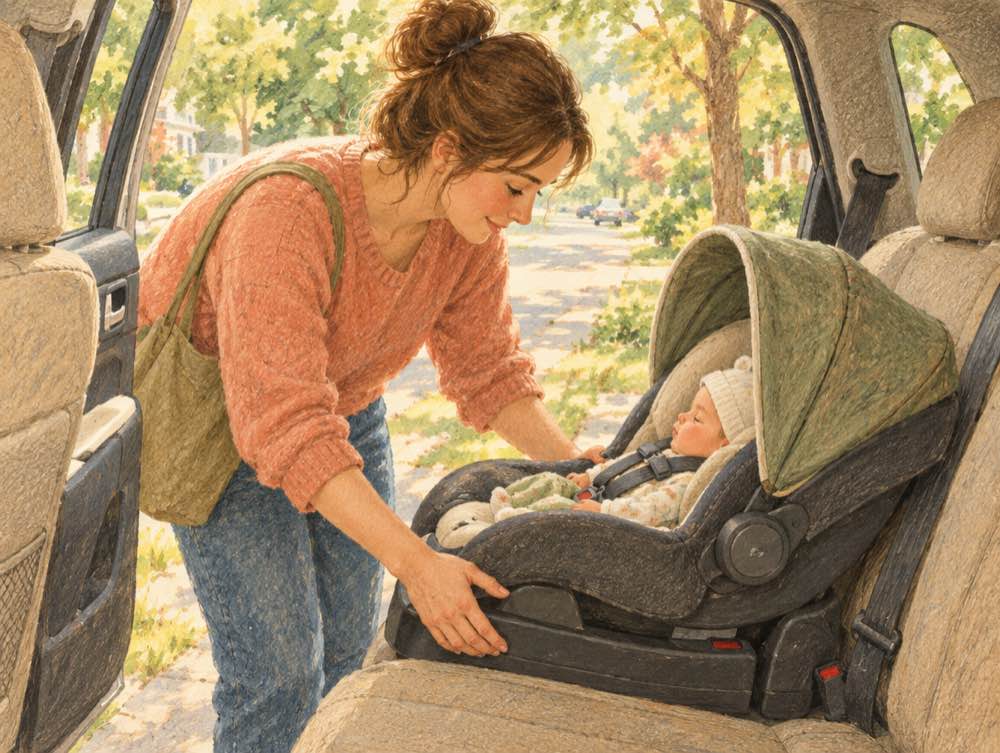
Never install a rear-facing seat in the front seat while the front passenger airbag is on. When the airbag deploys, it hits the back of the seat with enormous force and can seriously injure your baby. In general, the back seat is the safest place for children. If the front seat is unavoidable, check your car's owner's manual to make sure the airbag can be turned off, and consider this rule together with the seat manufacturer's instructions. After installing the seat, hold it at the attachment point and shake it side to side and forward; it should not move more than a few centimeters. On rear-facing seats, check the recline angle indicator; a newborn's head should not fall forward. Don't put hard, heavy objects beside or behind the seat; they can be thrown forward in a sudden stop.
Harness adjustment: the pinch test and bulky coats
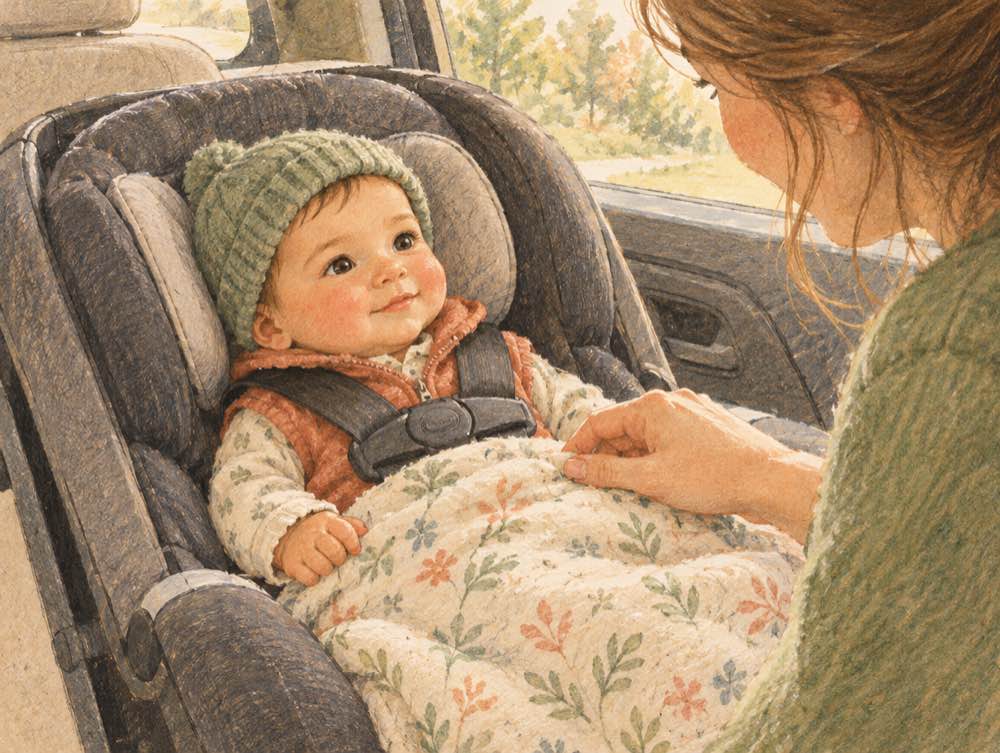
Even the best seat can't do its job if the harness straps are loose. In rear-facing seats, the shoulder straps should come out at or just below your baby's shoulders. After buckling, try to pinch the strap fabric into a fold with your fingers at collarbone level; if the fabric folds, the harness is loose, so tighten it. Your baby should not be put in the seat in a thick coat, puffy snowsuit or puffer vest; these compress in a crash and the harness is suddenly left loose. Dress your baby in thin layers, and after buckling, keep them warm by laying a blanket or their coat over them backward. Don't add head supports, strap pads or seat inserts that weren't supplied with the seat by the manufacturer; they can change the conditions the seat was tested in.
The first ride home from the hospital and long trips
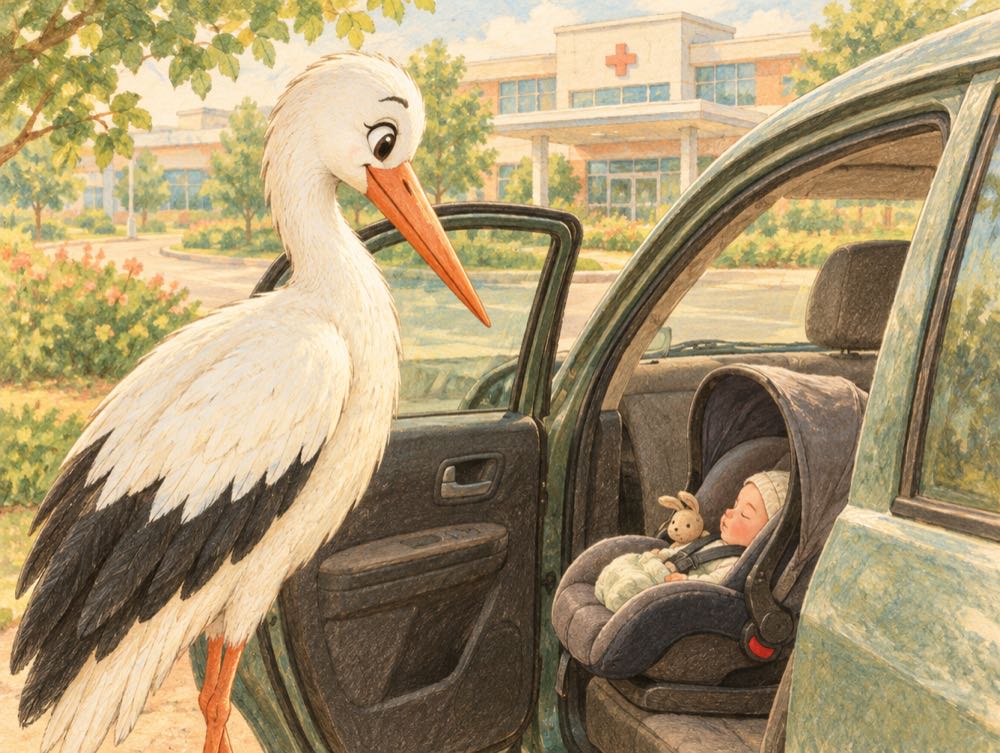
Your baby's first trip will be from the hospital to home, so buy the seat a few weeks before the birth, try installing it in your car, and practice adjusting the harness with a doll. Since you'll be both tired and excited on the day of the birth, these rehearsals really help. A car seat is designed for traveling in a car. Don't use the baby seat as a sleeping place at home; staying in a semi-upright position for a long time can strain young babies' airways. If your baby falls asleep on the trip, lay them on their back on a flat, firm surface when you get home. Many manufacturers and experts recommend keeping continuous time in the seat short on long trips and taking frequent breaks; during breaks, take your baby out of the seat, and if possible have an adult sit next to them in the back seat.
When should you move up a seat? Secondhand seats
Seats are changed according to the seat's limits, not your baby's age. When your baby goes over the height or weight limit on the label, or the top of their head gets close to the top edge of the seat shell, it's time to move up to the next seat; the manual gives a clear measurement for this. Legs sticking out is not a reason on its own. Be careful with secondhand seats. Don't use a seat whose history you don't know, that may have been in a crash, that has no label or manual, that is missing parts, or that has passed the period of use stated by the manufacturer. A seat that has been in a crash may have damage you can't see; many manufacturers recommend replacing the seat after a crash. Even if you're getting a seat from someone close whose history you know, check the approval label and the parts carefully.
Taxis, planes and an in-store checklist
If you'll be traveling by taxi or in another car, take your baby's seat with you; a model that can be installed with the seat belt makes this much easier. For flights, airlines' rules on child seats vary; ask the airline in advance. In-store checklist: Is there an orange approval label, and is it R129 or R44/04? Is the height and weight range right for your baby, and how long can it be used rear-facing? Has it been tried in your own car, and is your car on the vehicle compatibility list? Can the harness be adjusted easily with one hand, and is the cover washable? Is the manual in English, and does it come with the seat? Extras you don't need: add-on head pillows, strap covers, protective mats placed under the seat and toy arches with mirrors; these are not part of the seat's safety testing.
Sources (4)
- UN Regulation No. 129 (i-Size, enhanced child restraint systems), UNECE
- Car Seats: Information for Families, American Academy of Pediatrics (AAP) · HealthyChildren.org
- Baby and child safety, NHS (England)
Sources last reviewed: October 2026. This article was written for Little Pip and is based on information published by these organizations.