 Little Pip
Your Baby's Sleep and Safe Sleep
On their back, in an empty crib, in the same room. Simple rules that lower the risk of sudden infant death, and what you need to know about how newborns sleep.
Newborns spend most of the day asleep, but that sleep comes in short stretches and they can't yet tell night from day. In the first months, what parents wonder about most is how much their baby sleeps, but what matters most is how they sleep. Sudden infant death syndrome (SIDS) is rare, but a few simple sleep rules lower the risk considerably. Learning these rules before your baby arrives and sharing them with everyone who will care for your baby is one of the most valuable gifts you can give.
On their back for every sleep
Put your baby down on their back for every sleep, at night and during the day. Putting them on their side or tummy raises the risk. It's a common myth that a healthy baby sleeping on their back is more likely to choke if they spit up; babies have reflexes that prevent this. Once your baby can roll from back to tummy and back again on their own, you still put them down on their back, but you don't need to turn them back if they roll over. Tummy time while they're awake and supervised is important for developing their neck and back muscles.
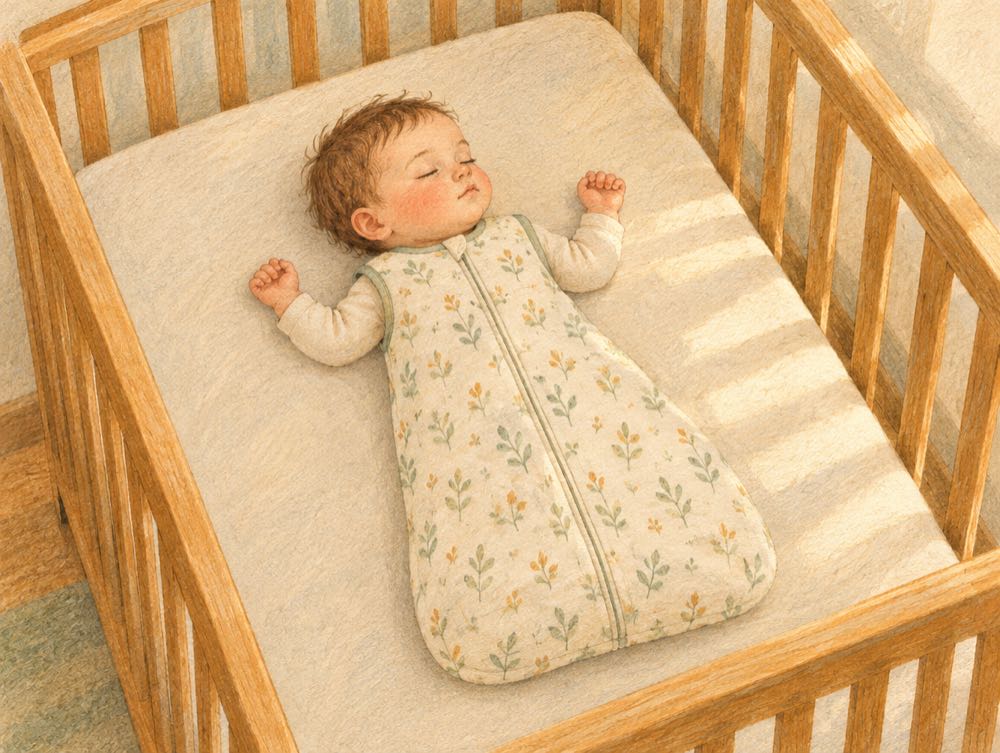
An empty, firm, flat mattress
Your baby should sleep in a crib that meets safety standards, on a firm, flat mattress with a well-fitting sheet. Pillows, comforters, thick blankets, crib bumpers, toys and soft items should not be in the crib. If you're worried about your baby getting cold, you can use a sleep sack in your baby's size instead of a blanket. Inclined sleepers, baby bouncers, strollers and swings aren't suitable for routine sleep; if your baby falls asleep in one, move them to a flat surface. Sleeping with your baby on an armchair, sofa or floor cushion carries a very high risk; if you're tired, put your baby down in their crib first.
Same room, separate bed
In the first months, ideally for the first six months, it's recommended that your baby sleep in their own crib but in your room. This makes it easier to hear and feed your baby at night. Sharing a bed is especially dangerous if either parent smokes, has drunk alcohol or taken medicine or drugs that cause drowsiness, is extremely tired, or if the baby was born early or with a low birth weight. It's also important that the room isn't too hot, that your baby isn't covered too much, and that they don't wear a hat indoors while sleeping. No one should smoke around your baby. Breastfeeding, and offering a pacifier at sleep time once breastfeeding is well established, are also among the factors that lower the risk.

A gentle start to a sleep routine
Keeping the curtains open during the day, allowing normal household sounds, and keeping the light dim and voices calm at night help your baby learn the difference between night and day. A short, repeated bedtime routine, such as a bath, a massage or a lullaby, becomes a calming signal over time. If you swaddle, wrap loosely so the hips are free, and stop swaddling once your baby shows signs of rolling. If your baby is struggling to breathe, turning blue or can't be woken, call your local emergency number (911 in the US, 999 in the UK) right away. For questions about sleep routines, feeding or growth, you can ask your baby's doctor.
Sources (3)
- Sleep-Related Infant Deaths: Updated 2022 Recommendations for Reducing Infant Deaths in the Sleep Environment, American Academy of Pediatrics (AAP) · 2022
- Caring for your baby at night, UNICEF UK Baby Friendly Initiative
Sources last reviewed: October 2026. This article was written for Little Pip and is based on information published by these organizations.