 Little Pip
Baby Movements and Kick Counting
Your baby's movements are their way of telling you they're well. Why it matters to know their pattern, and what to do if movements slow down.
Feeling your baby's first flutters is one of the most unforgettable moments of pregnancy. In a first pregnancy these movements are usually noticed between weeks 18 and 22, and a little earlier, around week 16, in women who have given birth before. At first they feel like butterfly wings or a faint bubbling; over time they turn into clear kicks, rolls and rhythmic hiccups. These movements are your baby's most natural way of telling you they're well.
Why should you keep track?
Your baby's movements are an important sign of how they're doing. Fewer movements can sometimes be the first sign that a baby is struggling in the womb, and when this is noticed early, the right checks can be done in time. That's why it's recommended that from about week 24 you get to know your baby's pattern of movements and contact your doctor or midwife without waiting if movements slow down or change. The goal isn't to fixate on a certain number but to learn their own pattern. Every baby has different active times and moves with a different frequency and strength; over time you'll know your baby's normal better than anyone.
How to count
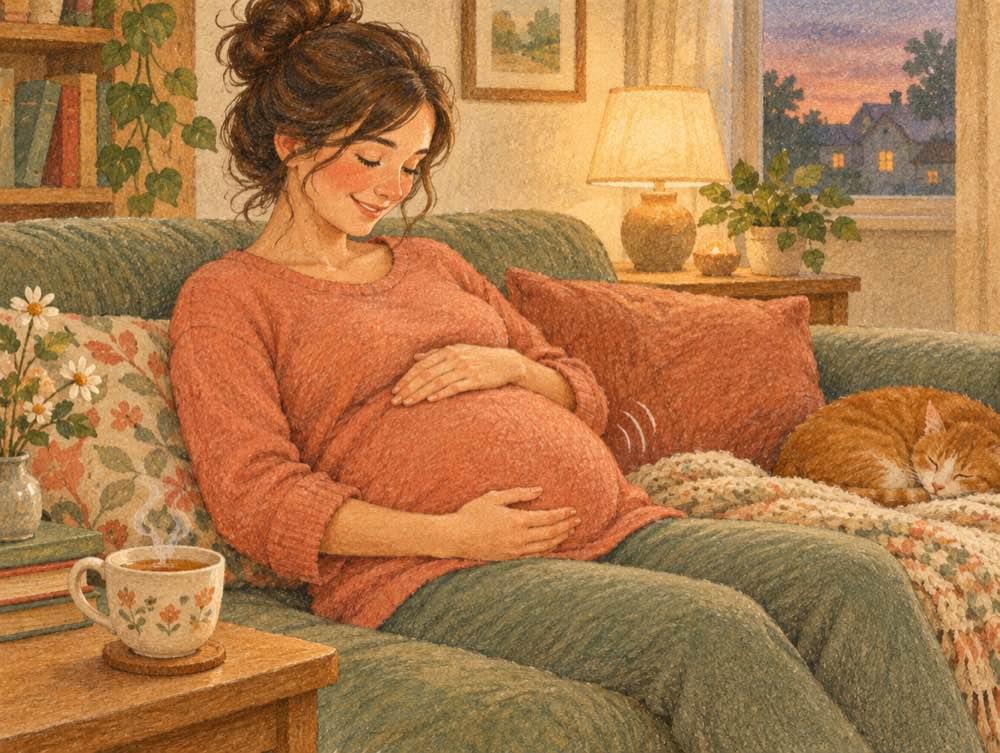
Pick a time when your baby is usually active; most babies move more in the evening or after their mom has eaten. Lie on your left side or sit comfortably, put your hands on your belly and focus on your baby. Count each clear movement, such as a kick, roll or push. A common method is to note how long it takes to feel ten movements; most babies do this in much less than two hours. The kick counter in the app helps you keep these notes regularly and see changes from day to day.
A common myth
It's often said that babies move less as birth gets closer because they run out of room, but this isn't true. In the last weeks the type of movement may change; you may feel more squirming, pushing and rolling instead of big kicks. But how often your baby moves shouldn't clearly decrease. Babies have sleep periods of 20 to 40 minutes, and it's normal for them to be quiet then. When movements decrease, it's better to have the change checked by a professional than to spend time trying to wake your baby up.
What to do if movements slow down
If you feel your baby's movements have decreased, changed or stopped, don't wait until the morning or your next appointment. Call your doctor or midwife right away, or go to the hospital where you plan to give birth. Most likely everything will be fine and you'll go home relieved; the check is quick, with a recording of your baby's heartbeat (a non-stress test, or CTG) and an ultrasound if needed. Don't feel you're bothering anyone; midwives and doctors are glad to do these checks. You know your baby better than anyone, and trusting your instincts is always the right step.
Sources (3)
- Reduced Fetal Movements (Green-top Guideline No. 57), RCOG · 2011
- Antenatal care (NG201), NICE · 2021
- Antepartum Fetal Surveillance (Practice Bulletin No. 229), ACOG · 2021
Sources last reviewed: October 2026. This article was written for Little Pip and is based on information published by these organizations.