 Little Pip
The First Month: Your Newborn's World and Reflexes
The first four weeks are about sleep, feeding and getting to know each other. Here are your baby's built-in reflexes, what they can see and hear, and how you can be there for them.
The first month is a big adjustment for you and your baby. Your baby spends most of the day sleeping and feeding, and in the short awake moments gets to know you by your smell, your voice and your face. Their movements may look scattered, even a little strange. Their arms fly open with a startle, their hands are usually in fists, and their gaze drifts in and out. Most of this is completely normal. What we describe below is typical for most babies. It isn't a test or a deadline; every baby develops at their own pace.

What might you notice this month?
A newborn sees best at about 20–30 cm (8–12 in), which is roughly your face when you hold them. They love looking at faces, especially eyes, and at strong contrasts like black and white. They begin to recognize familiar voices and may calm down when they hear you. A sudden loud noise makes them startle or cry. Lying on their tummy, they may lift their head for a moment and turn it to the side. They move their arms and legs in quick, jerky bursts, a sign that their nervous system is still maturing. Crying is their strongest way to communicate: it's how they tell you they're hungry, tired, need a fresh diaper or simply want to be close to you.
Reflexes your baby is born with
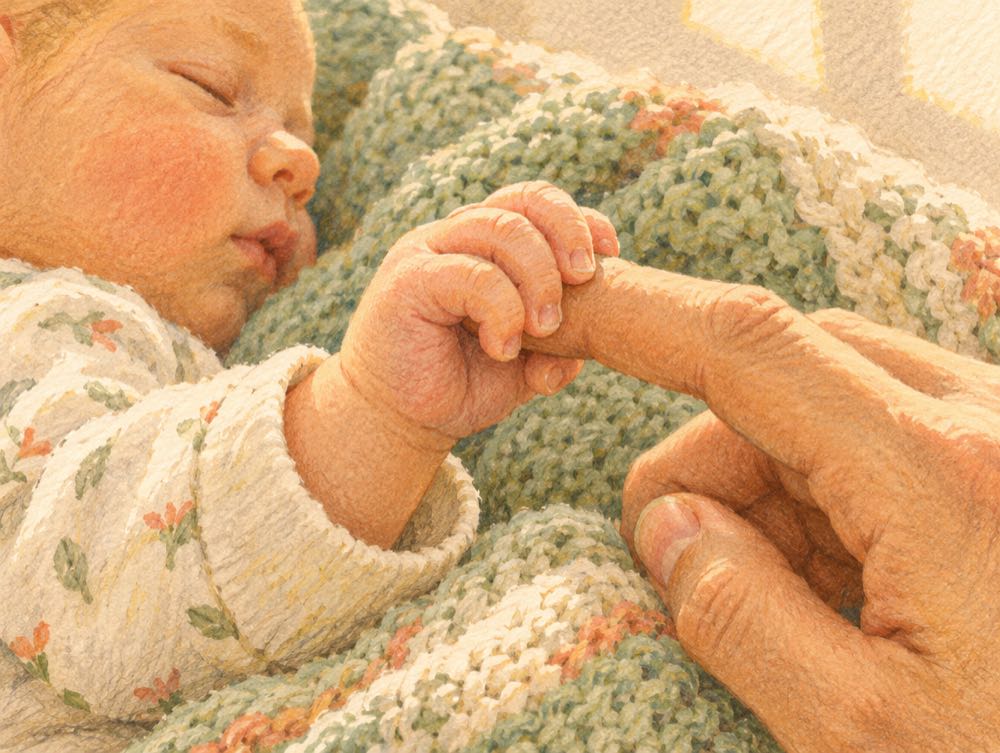
Your baby arrives with some automatic movements, and the doctor checks them during exams. In the startle (Moro) reflex, a sudden noise or a feeling of falling makes them fling their arms out and then pull them back in. In the rooting reflex, when you touch their cheek they turn toward it and open their mouth; the sucking reflex helps them feed. Put your finger in their palm and they grip it tightly. Held upright with their feet touching a firm surface, they may move their legs as if stepping. Lying on their back, they often stretch out the arm on the side they're facing and bend the other. Most of these reflexes fade over the coming months and give way to deliberate movements.
Supporting your baby through play
At this age, play is very simple: closeness, voices and touch. Skin-to-skin contact calms your baby and strengthens your bond, and moms and dads can both do it. When your baby is awake and calm, bring your face close to theirs, talk slowly, smile and give them time to respond. Singing lullabies or describing what you're doing during the day plants the first seeds of language. While they're awake, you can start short tummy-time moments on your chest or on a flat surface. If your baby looks away, yawns or gets fussy, they may be tired; then it's best to dim the lights and keep things calm.
Sleep and feeding
Newborns can't yet tell day from night; they wake at short intervals and want to feed often. Breastfed babies often feed 8–12 times a day, or even more; formula-fed babies also get hungry every few hours. Watching your baby's cues, like bringing their hands to their mouth or turning their head to search, is a more reliable guide than the clock. For every sleep, lay your baby on their back in their own flat, firm crib, with no pillows, toys or loose blankets; sharing a room for the first months is recommended. You can also read the safe sleep article in Discover for more details.

When to talk to your baby's doctor
If your baby isn't feeding well, has clearly fewer wet diapers, is hard to wake, or their jaundice spreads from the face to the body and legs, contact their doctor the same day. If they don't react to loud sounds at all, look very floppy or very stiff, or don't move one arm as much as the other, get them seen without waiting too. In a baby under three months, a temperature of 38 °C (100.4 °F) or higher always needs to be checked right away. If they're struggling to breathe, their lips are turning blue, they seem to be having a seizure or they're unresponsive, call your local emergency number (911 in the US, 999 in the UK). If your instinct tells you something isn't right, don't hesitate to ask.
Sources (4)
- Developmental Milestones: 1 Month, American Academy of Pediatrics (AAP) · HealthyChildren.org
- Your baby's development, NHS (England)
- Parenting: Child development, UNICEF
Sources last reviewed: October 2026. This article was written for Little Pip and is based on information published by these organizations.