 Little Pip
Iron and Anemia in Pregnancy
Weakness, paleness, getting out of breath quickly... The signs of anemia, iron-rich meals and small tricks that help your body absorb more.
In pregnancy your blood volume increases, and your baby also needs iron to grow. That's why your iron needs rise noticeably during this time, and anemia from low iron is one of the most common problems in pregnancy. Mild anemia often goes unnoticed, but if it gets worse it can leave you very tired and make you less able to cope with blood loss at the birth. The good news: anemia shows up on a simple blood test, and in most cases it can be corrected with diet and the supplement your doctor recommends.

Signs of anemia
Because tiredness is already common in pregnancy, anemia can be hard to spot. Feeling much weaker than usual, getting out of breath on the stairs, a racing heart, headaches, dizziness, pale skin and pale inner eyelids, cold hands and feet, hair loss and brittle nails can all be signs. Some women crave things that aren't food, such as ice, soil or starch; don't be embarrassed to tell your doctor or midwife, because it can be linked to low iron. Your blood count is checked several times during pregnancy care; if you have symptoms, mention them without waiting for the next checkup.
An iron-rich table
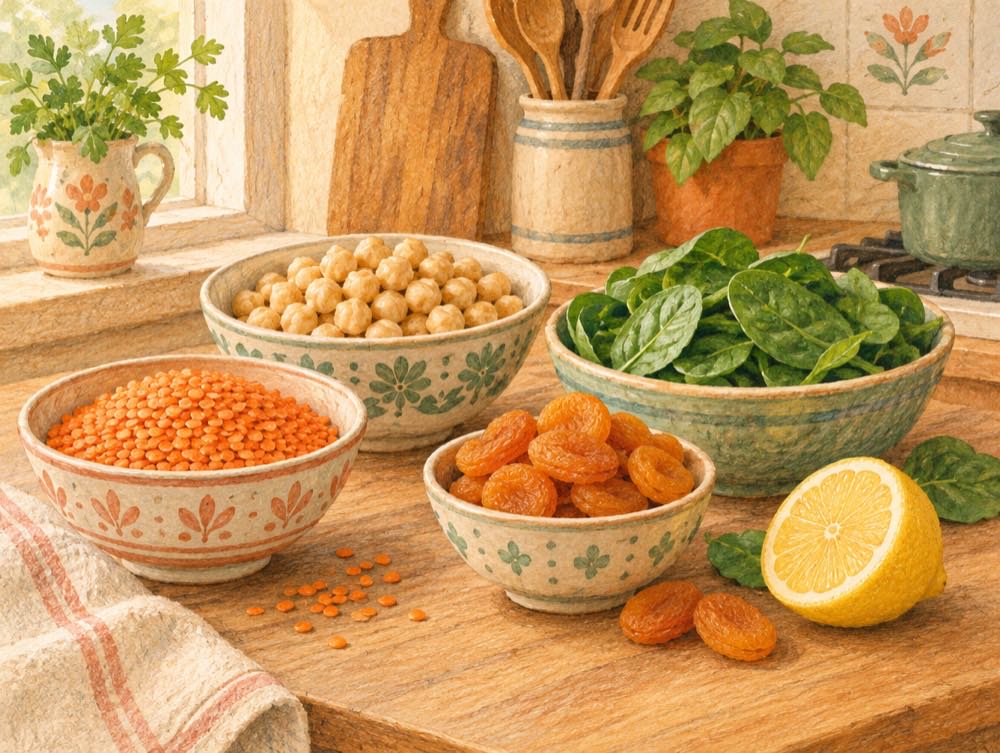
The type of iron the body absorbs most easily is found in animal foods: well-cooked red meat, chicken and turkey, well-cooked eggs and low-mercury fish are examples. Plant foods add a lot to your table too: lentils, chickpeas, dried beans and kidney beans, dark leafy greens such as spinach and chard, whole grains, bulgur, tahini, pumpkin seeds, and dried fruits such as dried apricots, raisins and figs. Grape or carob molasses also contributes, but isn't enough on its own. Liver and liver products are rich in iron, but they aren't recommended in pregnancy because they contain very high amounts of vitamin A.
Small tricks that help absorption
Vitamin C increases how much iron you absorb, especially from plant foods. Squeezing lemon into your lentil soup, adding a parsley-rich salad or peppers and tomatoes next to your beans, or having an orange or a tangerine after a meal are easy and tasty ways to do it. Some substances in tea and coffee, on the other hand, reduce iron absorption. So try to drink your tea not with your meal but a while after it; it's a small change that makes a real difference. The calcium in dairy products can also reduce iron absorption somewhat; if you take an iron supplement, ask your doctor or pharmacist how and when to take it.
Iron supplements
Based on your blood results and how many weeks pregnant you are, your doctor or midwife may recommend an iron supplement for you. Take the supplement the way and at the dose your doctor recommends; don't increase the dose on your own or take more than one supplement together. In some people iron can cause constipation, an upset stomach and darker stools; dark stools are usually harmless. If it's bothering you, talk to your doctor rather than stopping; another option may be found. Always keep iron supplements somewhere children can't reach; they can be poisonous for children. If one is swallowed by accident, call your local poison information center (Poison Control, 1-800-222-1222, in the US; NHS 111 in the UK) or your local emergency number (911 in the US, 999 in the UK).
When to see the doctor
If you have extreme weakness, tiredness that rest doesn't fix, shortness of breath, a racing heart or frequent dizziness, tell your doctor or midwife without waiting for the next checkup. If you have chest pain, can't catch your breath even at rest, faint or have serious bleeding, call your local emergency number without waiting. If you've been diagnosed with anemia before, had pregnancies close together, are pregnant with twins, don't eat meat or can't eat enough because of severe nausea, be sure to talk about it with your doctor; your blood levels may need to be watched more closely.
Sources (4)
- Iron deficiency anaemia, NHS (England)
- Anaemia (fact sheet), World Health Organization (WHO)
- Foods to avoid in pregnancy, NHS (England)
Sources last reviewed: October 2026. This article was written for Little Pip and is based on information published by these organizations.