 Little Pip
The First Three Months: What's Happening, What to Do
Tiredness, nausea, tender breasts and mixed feelings. What's happening in your body in the first trimester, and the first steps to take.
The first three months of pregnancy are when the fastest changes happen on the inside, while hardly anything shows on the outside. The foundations of your baby's organs are laid in these weeks, and your body shifts into a whole new rhythm under the influence of hormones. Many women go through this time with both joy and uncertainty: you're happy about the two lines on the test, but you're also tired, you feel sick and you have lots of questions. All of this is very normal. In this article you'll find what to expect in the first three months, how to take good care of yourself, and when to see your doctor or midwife right away.
What's changing in your body?
Pregnancy hormones rise quickly, especially in the first weeks. Your breasts may become fuller and more tender, and the area around your nipples may darken. As your uterus grows, it presses on your bladder and you start needing to pee more often. Your blood volume increases and your heart works a little faster, so you may feel dizzy if you stand up suddenly. Some women notice a strong sensitivity to smells, a metallic taste in the mouth, bloating and constipation. Mild pulling in the lower belly or cramps like those before a period can happen too. How strong these symptoms are varies a lot from person to person; having no symptoms at all doesn't mean something is wrong.

Tiredness and nausea
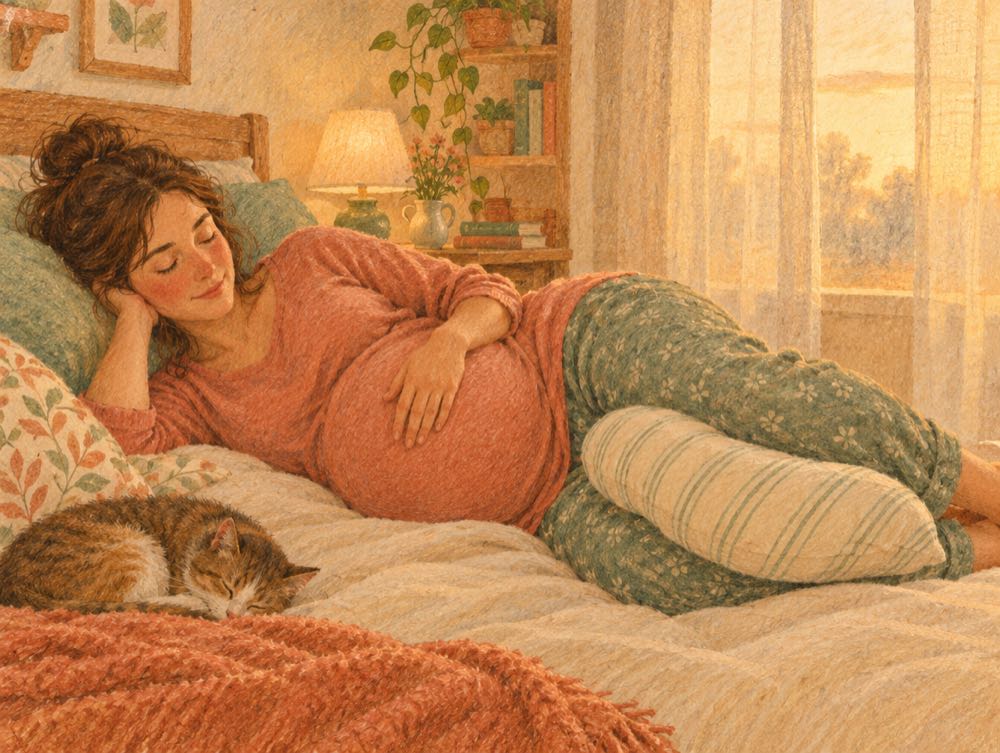
The two most common complaints of the first three months are tiredness and nausea. Your body is working very hard, so it's normal if you can't keep your eyes open in the afternoon. Rest whenever you can, try going to bed early and share the jobs you can with others. Nausea can come at any time of day and eases for most women toward the second trimester. Small, frequent meals, not letting your stomach get empty, staying away from strong-smelling food and sipping fluids slowly can help. You'll find more tips in the nausea article in Discover. If you can't keep anything down, or you're peeing much less, tell your doctor or midwife without waiting.
Your feelings are changing too
You may feel very happy one moment and tearful the next. Along with hormones, tiredness, nausea and taking in the big change in your life can make your feelings rise and fall. Worrying about whether the pregnancy is going well is also very common at this stage. Sharing your feelings with your partner or someone you trust lightens the load. When and to whom you announce your pregnancy is entirely your decision. If your anxiety has grown enough to make daily life hard, if you've felt low for a long time, or if you can't enjoy anything, tell your doctor or midwife; mental health is part of pregnancy care too.

Your first to-do list
When you find out you're pregnant, make an appointment with an obstetrician, your doctor or a midwife; the first visit usually happens in the early weeks. If you haven't started yet, ask your doctor about taking folic acid. Stop smoking and drinking alcohol; getting support for this is very valuable. Don't stop medicines you take regularly on your own, but tell the doctor who prescribed them right away that you're pregnant. Avoid risky foods such as raw or undercooked meat and unpasteurized dairy products, and limit caffeine. If you work with strong chemicals or radiation, talk to your doctor about your working conditions. Most of these steps are simple, but they make a big difference for your baby.
Small ways to look after yourself
There will be days when you can't eat perfectly; when you feel sick, eating whatever your stomach will accept is an achievement too. As the nausea eases, you can move to a pattern built around vegetables, fruit, whole grains, legumes and protein. Don't forget to drink water through the day. Unless your doctor says otherwise, light movement such as walking is good for your energy and your mood. Avoid hot tubs, saunas and overheating. Note your questions in a small notebook or on your phone so you don't forget them at your appointment. Most importantly, be patient with yourself: your body is doing invisible but enormous work right now.

When to see a doctor right away
If you have vaginal bleeding or spotting, let your doctor or midwife know; if the bleeding is heavy, you're passing clots or it comes with severe pain, go to the emergency department. Severe pain on one side of your belly that doesn't go away, pain at the tip of your shoulder, dizziness or fainting can be signs of an ectopic pregnancy (a pregnancy growing outside the uterus); in that case call your local emergency number (911 in the US, 999 in the UK) without losing any time. Severe vomiting where you can't keep any food or drink down and you're peeing very little or your urine is dark, a temperature of 38 °C (100.4 °F) or higher, and burning and pain when you pee also need to be checked. If you feel inside that something isn't right, don't hold back; asking your doctor or midwife is always the right step.
Sources (4)
- Week-by-week guide to pregnancy, NHS (England)
- Common symptoms in pregnancy, NHS (England)
- WHO recommendations on antenatal care for a positive pregnancy experience, World Health Organization (WHO) · 2016
Sources last reviewed: October 2026. This article was written for Little Pip and is based on information published by these organizations.