 Little Pip
Caffeine: How Much Is Safe?
You don't have to give up your tea and coffee. Learn the daily limit, the hidden sources of caffeine and gentle ways to cut down.
A morning coffee or an afternoon tea is a ritual for many of us. The good news: you don't need to give up caffeine completely in pregnancy. Caffeine crosses the placenta to your baby, and your baby takes much longer than an adult to break it down. That's why high amounts have been linked to risks such as low birth weight. But moderate amounts are considered safe according to research. What matters is knowing your total caffeine from all sources during the day and staying below the recommended limit.

What's the daily limit?
The American College of Obstetricians and Gynecologists and many other health authorities recommend keeping caffeine below 200 milligrams a day in pregnancy. In practice, that's about one mug of filter coffee or two small espresso-sized cups of strong coffee. A small glass of brewed black tea has about 30 to 50 milligrams of caffeine, so three or four small glasses of light or medium-strength tea a day usually stay within this limit. But if you have coffee, tea and chocolate in the same day, you need to count them all together.
Hidden sources of caffeine
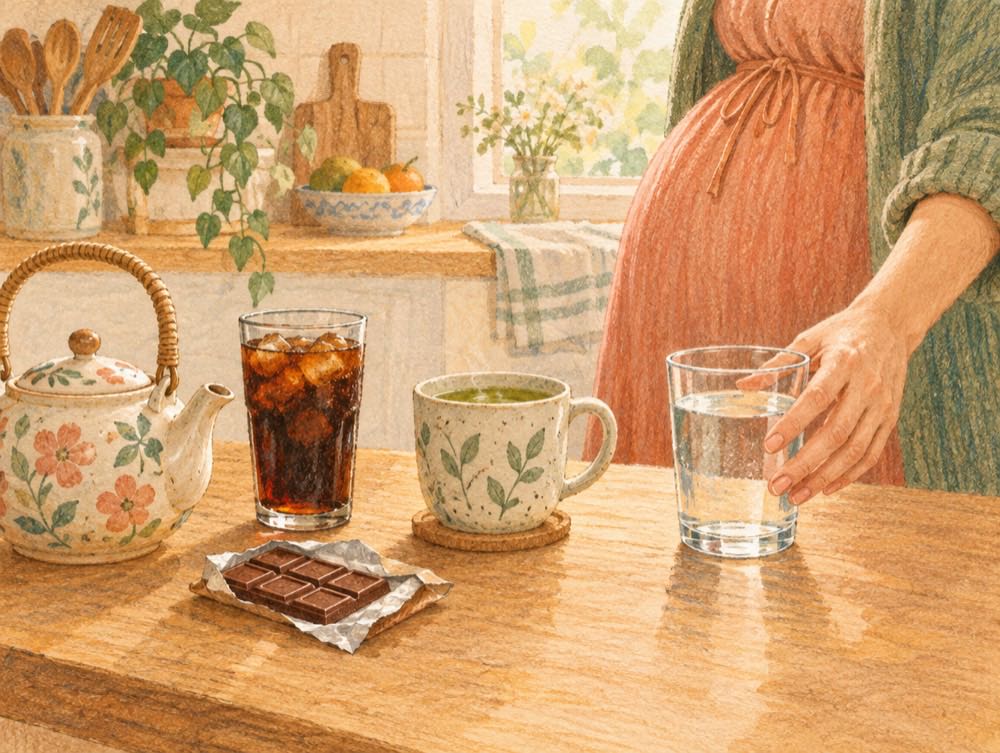
Caffeine isn't only in coffee. Green tea, black tea, cola-type sodas, bottled iced teas, dark chocolate and some cold or pain medicines also contain caffeine. Energy drinks aren't recommended in pregnancy, as they contain both high levels of caffeine and other ingredients whose safety in pregnancy isn't well known. Reading the label on packaged products gives you an idea. Switching between decaf coffee, plain sparkling water and warm milky drinks also helps you find a good balance.
Gentle ways to cut down
If you drink a lot of coffee, stopping suddenly can cause headaches and tiredness. Instead, cut down slowly over a few days. Brew your tea lighter, use a smaller coffee cup or try half-caf blends. Not leaving caffeinated drinks until the evening helps your sleep too. When you feel tired during the day, a short walk, a glass of water or a ten-minute nap often does more for you than a cup of coffee. Be flexible with yourself; the goal is balance, not perfection.
Sources (3)
- Moderate Caffeine Consumption During Pregnancy (Committee Opinion No. 462), ACOG · 2010
- Scientific Opinion on the safety of caffeine, European Food Safety Authority (EFSA) · 2015
- Foods to avoid in pregnancy, NHS (England)
Sources last reviewed: October 2026. This article was written for Little Pip and is based on information published by these organizations.