 Little Pip
My Baby Won't Stop Crying: A Step-by-Step Checklist
It's the middle of the night, your baby is crying and you don't know what they want. A start-to-finish checklist to help you stay calm, and the situations when you should get help right away.
Take a deep breath. Your baby is crying and you're right there with them; for your baby, that is already the most important thing. Crying is a baby's only language, and most of the time it has a simple cause that can be fixed. Go through the list below from top to bottom, one item at a time, without rushing. After each item, give your baby a few minutes; constantly switching methods can overstimulate them even more. If your baby is still crying when you reach the end of the list, this is not your failure; some babies, especially in the first months, cry for long periods without any cause being found. For the general course of crying, you can also read the article “Colic and Baby Crying” in the Discover tab.

1. Could your baby be hungry?
Hunger is the most common cause of crying in young babies, and crying is usually a late sign of hunger. It's preceded by early cues such as bringing their hands to their mouth, smacking their lips, and turning their head to search for the breast.
- Check how long it's been since the last feed; newborns get hungry very often.
- During so-called growth spurts, your baby may want to feed more often for a few days.
- If your baby refuses the breast or bottle while crying, calm them down a little first, then try again.
In breastfed babies, wanting to feed often is usually normal. If you're not sure whether your baby is getting enough, talk to your family doctor about the number of wet diapers and weight gain.
2. Gas or burping
Air swallowed during feeding bothers some babies. Hold your baby upright against your shoulder, or sitting up on your lap with their chin supported by your hand, and gently rub or lightly pat their back.
- Take a short burping break in the middle and at the end of a feed.
- Laying your baby on their back and slowly moving their legs as if pedaling a bicycle, or giving a gentle clockwise belly massage, helps some babies.
- If your baby is bottle-fed, check the flow rate of the nipple and the angle of the bottle.
It's okay if you don't get a result every time; some babies don't burp much. Don't give drops or herbal teas sold for gas without talking to your doctor.

3. Diaper, temperature and clothing
A wet or dirty diaper, diaper rash or a tight waistband can make your baby uncomfortable. Change the diaper and check for redness on the skin.
- Touch the back of your baby's neck or their chest: If they're sweaty and hot, remove a layer. Their hands and feet may be a little cool; this alone doesn't mean they're cold.
- Dressing your baby in one more layer than you're comfortable in is usually enough. Bundling too much both causes fussiness and is a risk during sleep.
- A clothing tag, a rough seam, a snap facing the wrong way or a tight elastic may be poking them.
- Check the room temperature; don't cover your baby's head with a hat indoors.
4. A wrapped hair: always check
A little-known but important cause: A strand of hair or a thread can wrap tightly around your baby's finger or toe, and in baby boys sometimes around the penis. This is called a hair tourniquet and it is very painful; the crying may start suddenly and seem never to stop.
- Take off their socks and onesie and check every finger and toe one by one under good light.
- Look for a thin groove, redness, swelling or color change on the finger or toe. Because parents tend to lose more hair in the months after birth, this may happen more often.
- Turn socks and mittens inside out and check for threads.
If you can't easily undo the hair, or if the finger or toe is swollen or has changed color, don't try to cut it; go to an emergency department without waiting.
5. Tired or overstimulated?
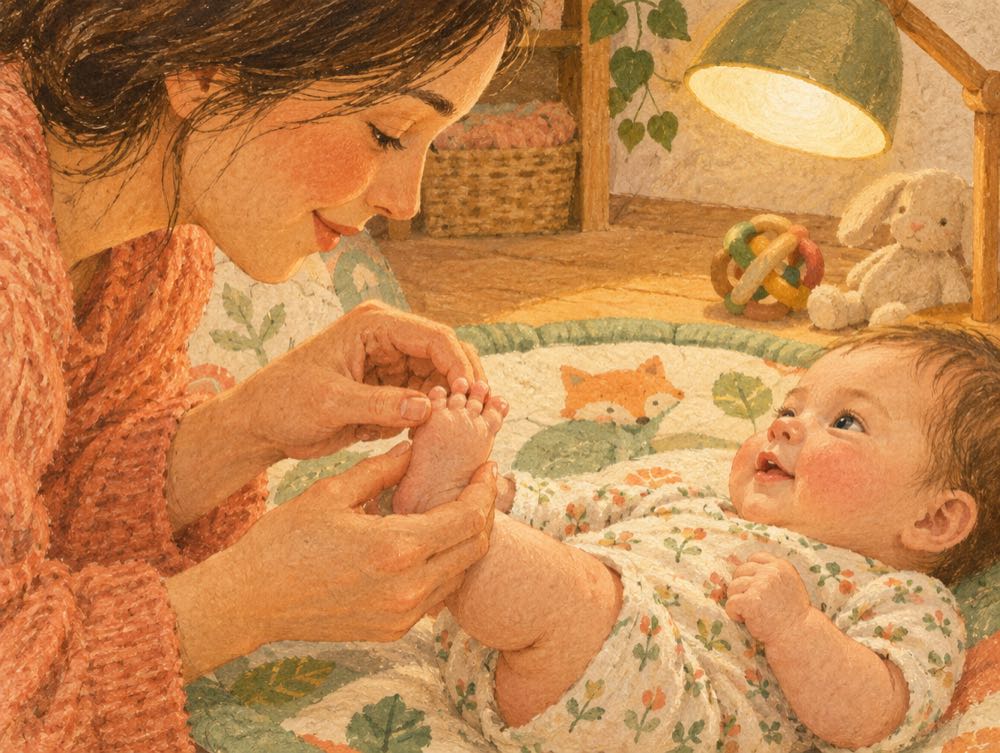
Babies can't recognize that they're tired and fall asleep on their own; tiredness often shows up as fussiness and crying. Yawning, rubbing their eyes, looking away, clenching their fists and jerky arm and leg movements can be clues.
- Dim the lights, turn off the TV and screens, and lower the noise.
- Limit visitors and passing your baby from person to person for that day.
- Hold your baby in a calm, dim room and patiently stick with a single method, for example rocking at a slow rhythm, for a few minutes.
Babies who have had a lot of stimulation during the day find it especially hard to settle in the evening. This is not a bad habit; it shows that their nervous system is still maturing.
6. Your baby may need closeness
Sometimes your baby doesn't need anything else, just you. For a baby who grew for months in a warm, dark, noisy and constantly moving place, being held feels very familiar. Holding your baby doesn't spoil them; responding quickly to their needs in the first months supports their sense of security.
- Hold your baby against your chest so they can hear your heartbeat.
- Try skin-to-skin contact: Your baby, in just a diaper, rests against your bare chest, and you're both covered with a blanket.
- Talk softly, hum or sing a lullaby; your voice is familiar to them.
- Carrying your baby in a suitable carrier or wrap keeps them close and frees your hands. Your baby's face should always be visible, and their chin should not drop onto their chest.
7. Are there signs of illness?
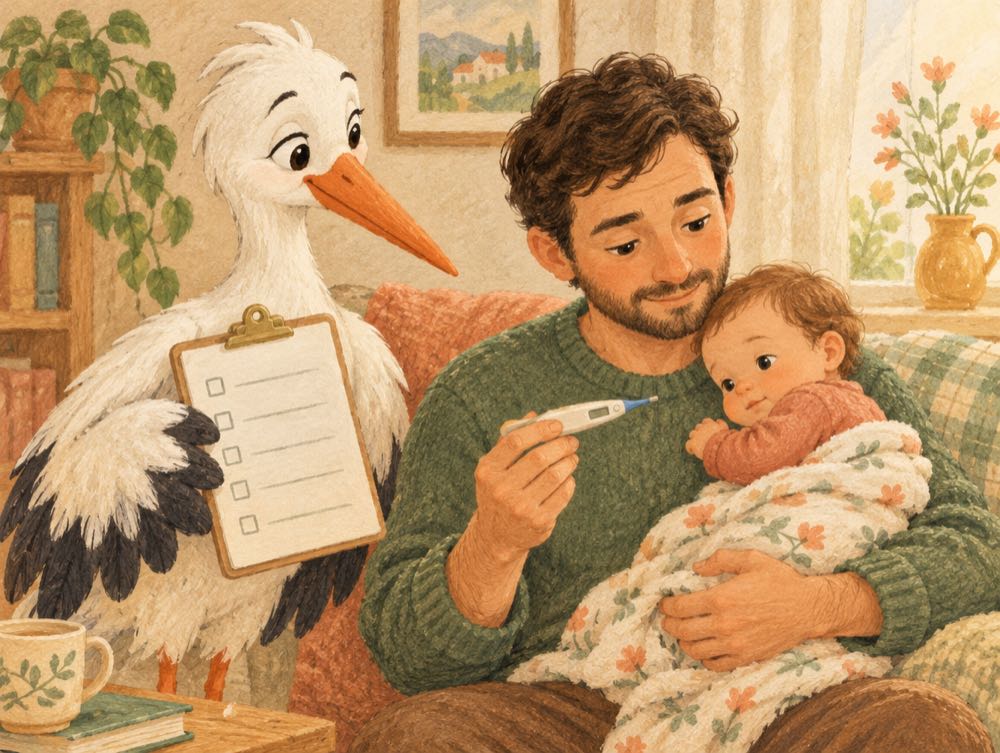
If you've tried everything above and your baby is still crying differently from usual, also check for signs of illness:
- Do they have a fever? Measure it under the arm with a digital thermometer.
- Are they feeding as usual, are there fewer wet diapers?
- Is their nose stuffy, are they coughing, is their breathing fast or labored?
- Are they vomiting, do they have diarrhea? Is the vomit green?
- Is there a rash on the skin? Does it fade when you press a glass against it?
- Are they pulling at their ear, does their crying get worse when you touch a certain spot?
- Are they hard to wake, floppier than usual or very restless?
If any of these apply, look at the danger signs below and contact your doctor. If you feel the crying is different from usual, that feeling matters too.
Things to try if your baby is still crying
If the list came up clear and your baby seems healthy, these may not always stop the crying, but they can ease it:
- Rock your baby slowly and rhythmically in your arms or walk around the room.
- Use a steady, constant sound like shushing or running water; keep the volume low.
- Try a gentle belly massage or a warm bath; keep your hand on your baby the whole time in the bath.
- Go for a short walk with the stroller; fresh air is good for both of you.
- If you use a pacifier, offer it to meet their need to suck.
- Hand your baby over to your partner or a relative; new arms and a new voice sometimes help.
If you feel tense, you can put your baby on their back in the crib and step away for a few minutes. No matter what, never shake a baby.

Right away: the doctor or your local emergency number (911 in the US, 999 in the UK)
Call your local emergency number without waiting if:
- Your baby is having trouble breathing, grunting, the skin below the ribs is pulling in, or their lips are turning blue.
- Your baby is floppy, unresponsive or very hard to wake.
- Your baby is having a seizure.
- There is a rash that doesn't fade with the glass test.
- The soft spot (fontanelle) is clearly bulging.
See a doctor or go to an emergency department the same day, without delay, if:
- A baby younger than three months has a fever of 38 °C or higher.
- The crying is unusually high-pitched, weak or moaning.
- Your baby refuses to feed or has noticeably fewer wet diapers.
- Your baby vomits green or bloody vomit, or there is blood in their poop.
- You can't remove a hair wrapped around a finger or toe.
Trust your instinct: If you feel something is wrong, talking to your doctor is always the right decision.
Sources (4)
- Soothing a crying baby, NHS (England)
- Crying & colic, American Academy of Pediatrics (AAP) · HealthyChildren.org
- Fever in under 5s: assessment and initial management (NG143), NICE · 2019
Sources last reviewed: October 2026. This article was written for Little Pip and is based on information published by these organizations.