 Little Pip
Umbilical Cord Care and Hygiene in the First Days
Keeping the cord stump clean and dry, knowing when it will fall off, and caring for nails, eyes and the diaper area. Answers to the most common care questions of the first days.
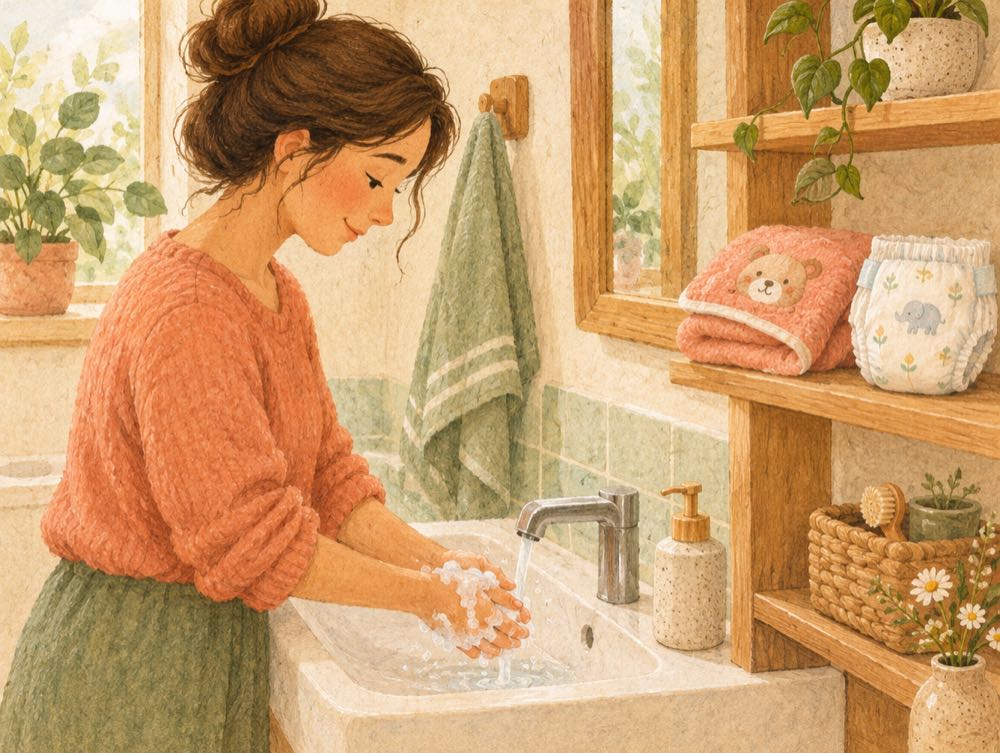
In the first days at home, touching your baby's tiny body can feel as nerve-racking as it is exciting. How do you care for the cord stump, how do you trim nails, is the crust in their eyes normal? Most of the answers are simple: cleanliness, patience and avoiding unnecessary fiddling. Washing your hands with soap and water before touching your baby and after changing diapers is the most effective way to prevent infections. In this article we go through basic care in the first weeks step by step. If your hospital or midwife has given you different advice, follow that.
The cord stump: keep it clean and dry
After birth, the small piece left from the umbilical cord gradually dries, darkens and falls off on its own. The World Health Organization recommends dry cord care during this time: keep the area clean and dry and don't put anything on it. If it gets dirty, gently wiping it with clean water and patting it dry with a soft cloth is enough. Folding the top of the diaper down below the belly button lets air get to it and keeps it from getting wet with pee. Don't pull the cord or try to remove it. Unless your doctor has advised something specific, don't apply powder, oil, herbs, coffee grounds or traditional mixtures; these can raise the risk of infection.
When does the cord stump fall off?
In most babies, the cord stump falls off between one and three weeks. Before it does, it dries and hardens and turns from brown to black; that's normal. When it falls off, or right after, you may see a few drops of blood or a small amount of yellowish discharge, which usually clears up on its own. If a small, moist, pink bit of tissue remains where it was, show it to your baby's doctor; it can be treated with a simple procedure. Until the stump falls off, many families prefer to sponge-bathe their baby or wipe them with a damp cloth; if you did put them in water, dry the belly button well afterwards.
Nail care
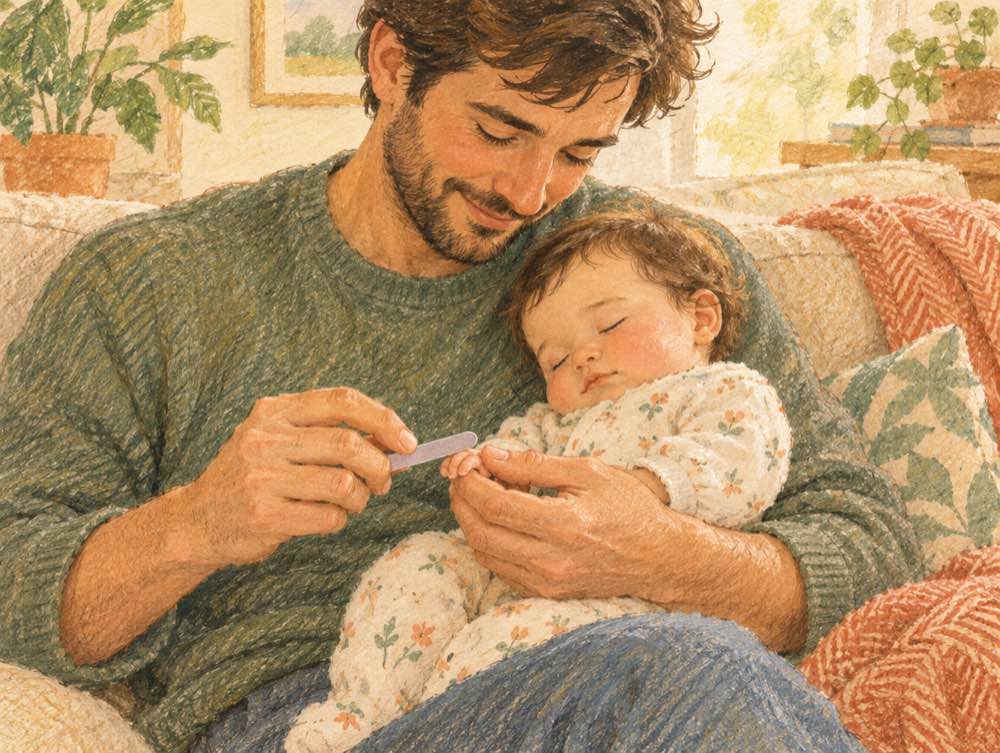
Babies' nails are soft but grow very fast and can scratch their faces. In the first weeks, filing them with a soft file made for babies is often enough. If you want to trim them, use round-tipped baby scissors or baby nail clippers, cut the nail straight across and gently press the skin at the fingertip down to separate it from the nail. This is much easier when your baby is asleep, or calm and full. Don't bite their nails off; germs in your mouth can cause infection. If there's a small nick, pressing on it with a clean cloth for a while usually stops the bleeding.
Eyes, nose and ears
Wipe away crust in the eyes with clean cotton wool dipped in water that's been boiled and cooled to lukewarm, from the inner corner of the eye to the outer; use a separate piece for each eye. Mild crusting in the eyes is common in the first weeks and is often because the tear duct hasn't fully opened yet. If there's redness, swelling or thick yellow-green discharge in the eye, show it to your baby's doctor. Clean only the outside of the nose and ears with a damp cloth; don't put anything like a cotton swab into the nostril or ear canal. If their nose is blocked, ask your pharmacist or doctor what you can do.
The diaper area and first-day surprises
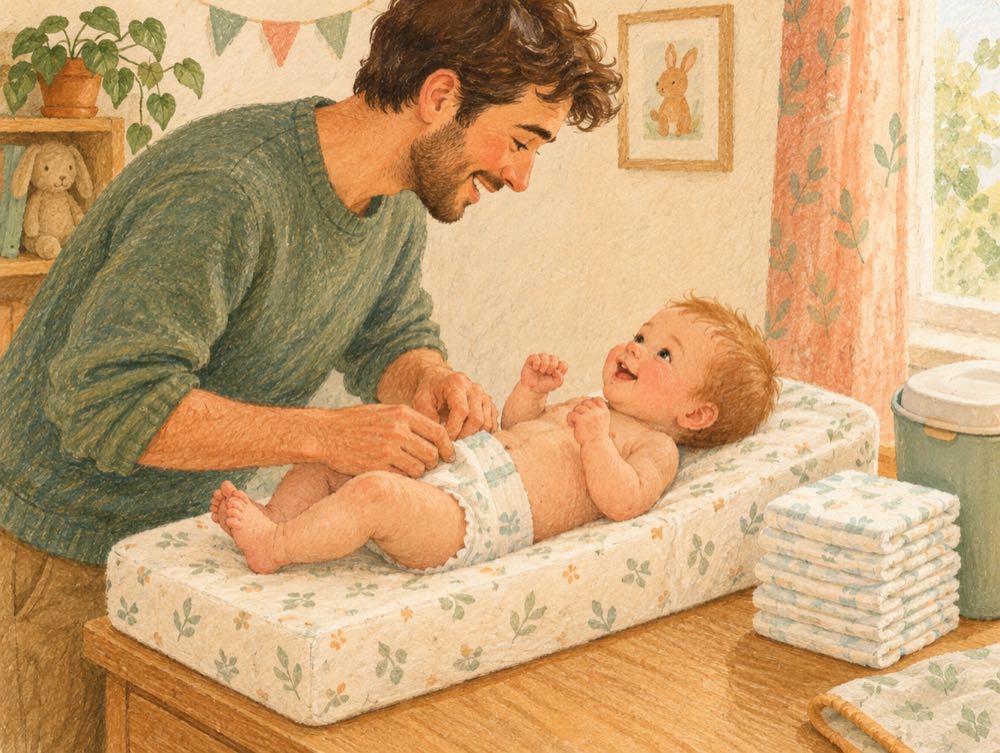
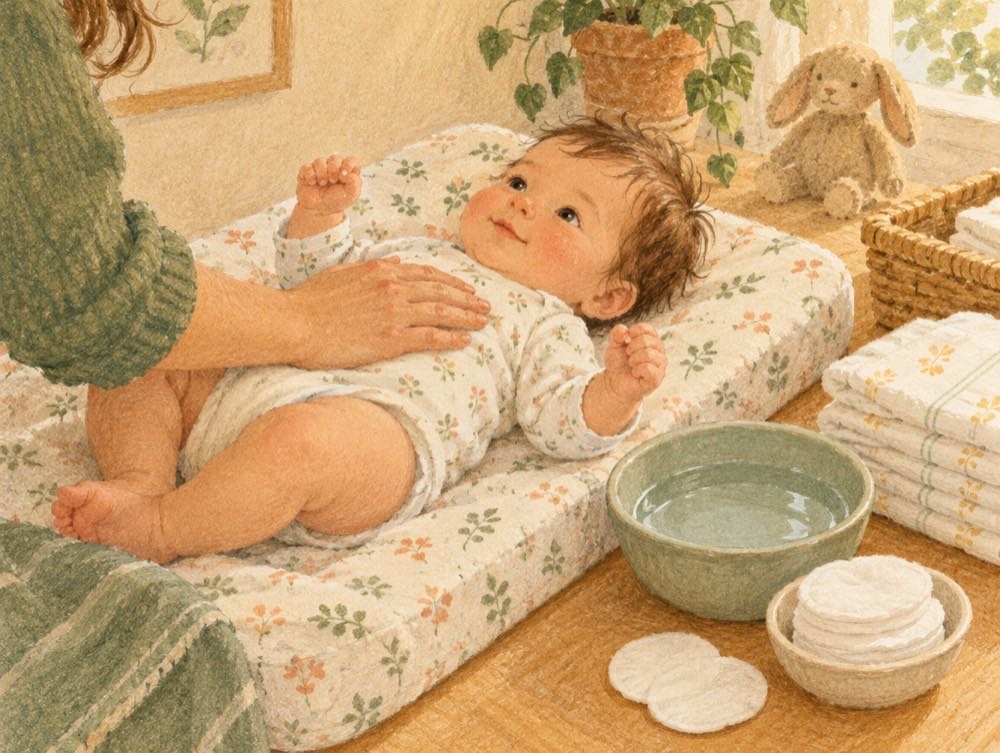
When changing a diaper, clean the area with lukewarm water and a soft cloth and dry it well. For girls, always wipe from front to back. In the first days, baby girls may have a white, mucus-like discharge or a little pink spotting in their diaper; this is the effect of hormones passed on from mom and usually goes away on its own. The same hormones can cause mild breast swelling in both girls and boys; don't press or squeeze. For boys, don't try to pull back the foreskin; it separates on its own over time. If your baby gets diaper rash, you can read the diaper rash and baby skin article in Discover.
When to see a doctor
If there's spreading redness, swelling, warmth, a bad smell or pus-like discharge on the skin around the cord stump, show it to your baby's doctor the same day. If the redness is spreading fast, your baby has a fever, isn't feeding well or seems listless, go to the ER without waiting. If the belly button bleeds more than a few drops and doesn't stop, press on it with a clean cloth and get help right away. In babies under three months, a temperature of 38 °C (100.4 °F) or higher always needs to be checked right away. Redness of the eyes with heavy discharge, or swollen eyelids, should also be seen by a doctor. If they're struggling to breathe, turning blue or unresponsive, call your local emergency number (911 in the US, 999 in the UK).
Sources (4)
- Caring for a newborn, NHS (England)
- Bathing & skin care, American Academy of Pediatrics (AAP) · HealthyChildren.org
- Newborn health, World Health Organization (WHO)
Sources last reviewed: October 2026. This article was written for Little Pip and is based on information published by these organizations.