 Little Pip
Heartburn and Indigestion
Why you get that burning feeling in your chest, and the changes in eating, posture and sleep that can ease it.
A burning feeling rising behind your breastbone is very common, especially in the second half of pregnancy. There are two main reasons: the hormone progesterone relaxes the valve between the stomach and the food pipe, and the growing uterus pushes up on the stomach. As a result, stomach acid can slip back into the food pipe. It's uncomfortable, but heartburn doesn't harm your baby and usually goes away on its own after birth. Luckily, a few small changes can ease it a lot.
What you eat and how you eat
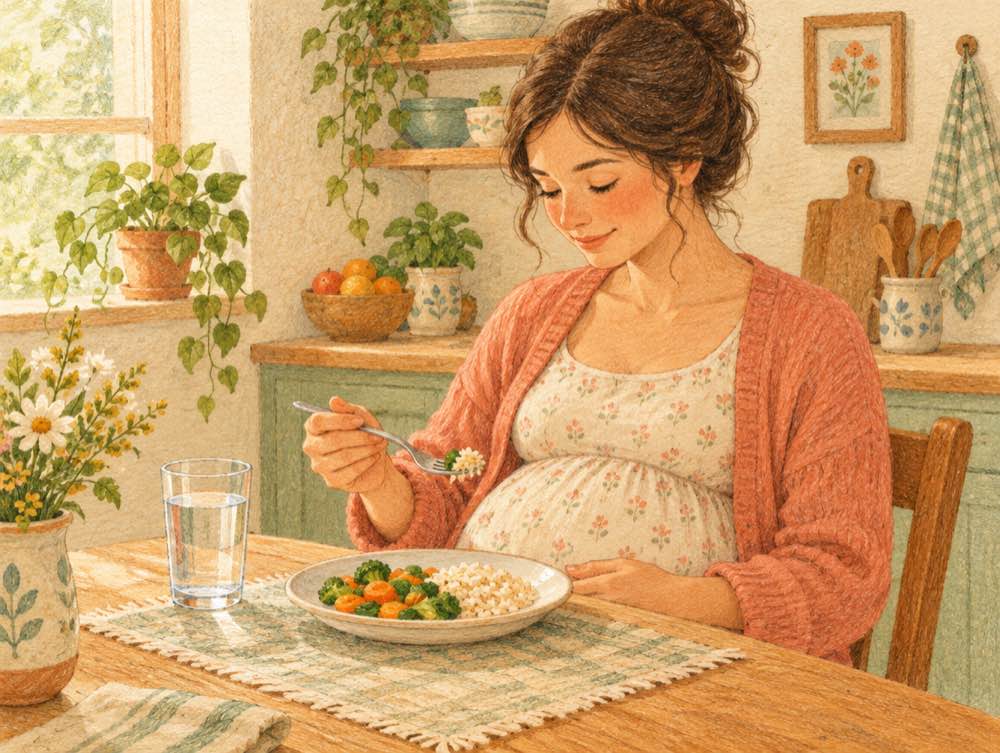
Eating small portions slowly and chewing well lightens the load on your stomach. Fatty, fried and very spicy foods, tomato paste, citrus fruit, chocolate, coffee and fizzy drinks trigger heartburn for some women. Keeping short notes for a few days can help you spot which foods bother you. Instead of drinking a lot with meals, spread your fluids between meals. A bowl of yogurt, a glass of milk or a few almonds soothe some women.
Posture and sleep
Lying down right after eating makes heartburn worse; try to finish your last meal at least two or three hours before bed. A short, gentle walk after eating can help digestion. Keeping your upper body slightly raised in bed, with pillows or by raising the head of the bed a few centimeters (an inch or two), makes it harder for acid to come back up. Lying on your left side helps many women too. Choosing comfortable, loose clothes over ones that squeeze your waist and belly also makes a difference.

Medicines and warnings
If lifestyle changes aren't enough, your doctor may recommend an antacid that's safe in pregnancy. Avoid taking medicines on your own, especially frequent use of home remedies such as baking soda. Some antacids can reduce iron absorption, so they shouldn't be taken at the same time as your iron supplement. An important note: severe pain just below the ribs, especially in the upper right of your belly, together with a headache or changes in your vision, may not be heartburn but a sign of preeclampsia. If this happens, go to the hospital without delay.
Sources (3)
- WHO recommendations on antenatal care for a positive pregnancy experience, World Health Organization (WHO) · 2016
- Antenatal care (NG201), NICE · 2021
- Hypertension in pregnancy: diagnosis and management (NG133), NICE · 2019
Sources last reviewed: October 2026. This article was written for Little Pip and is based on information published by these organizations.